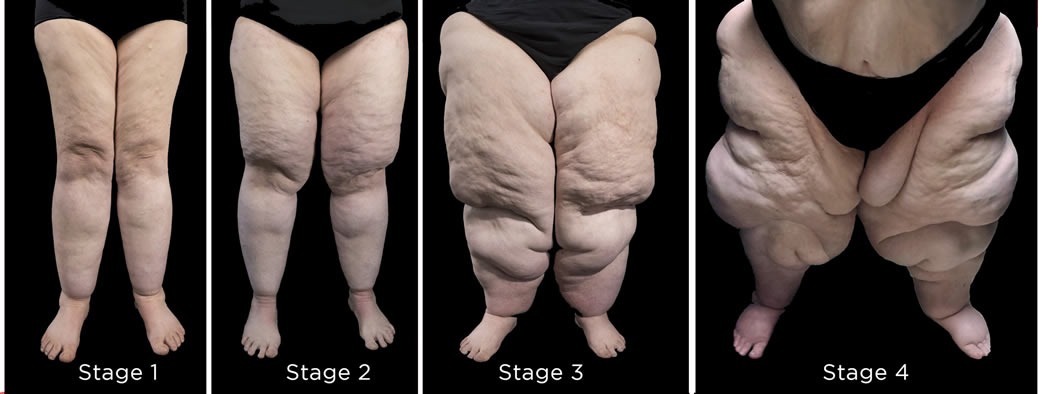
Lipedema is generally described as a chronic and generally progressive fat tissue disorder that almost exclusively affects women. It is characterized by a symmetrical enlargement of the lower body due to excessive fatty deposits from waist to the ankles, and patients also suffer from easy bruising, orthostatic edema, and pain. The condition is often confused with simple obesity, but often the fat deposits aren’t changed by weight loss. They can’t be starved or exercised away.
Heredity seems to play a part, and the onset of symptoms seems to coincide with times of significant hormonal upheaval, such as during puberty, pregnancy and menopause (Szel et al, 2014). Besides the disproportion between upper and lower body that occurs with lipedema, the most devastating feature may be that it is generally believed to be non-responsive to diet and exercise. First reported by physicians at the Mayo Clinic in 1940 (Wold, Hines & Allen, 1951), this condition continues to remain a poorly understood, largely under diagnosed, and profoundly impactful syndrome.
Gender and Lipedema
Gender is a major determinant of adipose tissue distribution. Research has shown that in general men are more prone to lipolysis, or fat burning, and women tend more toward lipogenesis, or fat creation and storage (Varlamov et al., 2015). Additionally, women have a tendency toward upper body lipolysis and lower body lipogenesis which may result in a lipedema presentation.
During puberty, females increasingly store subcutaneous fat throughout the body, with concentrations at the hips, buttocks and thighs. Women tend also to be more sensitive to insulin, the fat storage hormone, which puts them at higher risk for weight gain than men (Cignarella & Bolego, 2010).
Although considered by some clinicians to not be a lymphatic disorder, lipedema is a condition of concern because disrupted lymphatics are often a constituent of the condition. For instance, most women with this condition have some mild swelling and the increased sized of fat cells can interfere with lymphatic drainage.
Hence, a significant number of patients tend to also develop lymphedema.
Article Source: Lipedema